
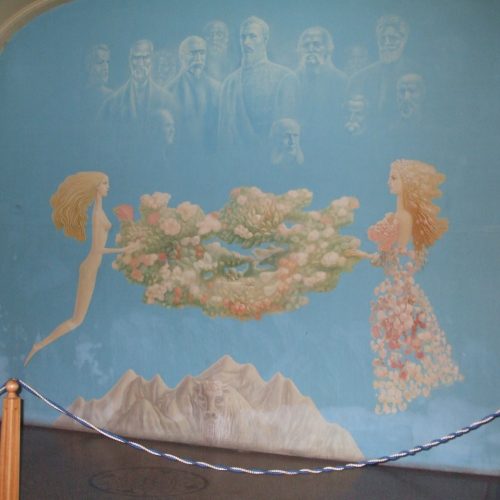
In what follows, I aim to tackle the issue of the politicisation of arts and aesthetics under the Romanian communist regime of Nicolae Ceaușescu. To this end, I will focus on how these cultural-political requirements influenced both art criticism and artistic production. According to the Frankfurt School philosopher Theodore Adorno, there is a significant difference […]

Surveying the events and publications focusing on art “behind the Iron Curtain” suggests that the concept of East European Art has been formed through the confrontation of various temporalities and localities, being haunted by paradigmatic misunderstandings. Such experience of hollow communication that shifts understanding to a metalevel is captured by the following scene: two different […]
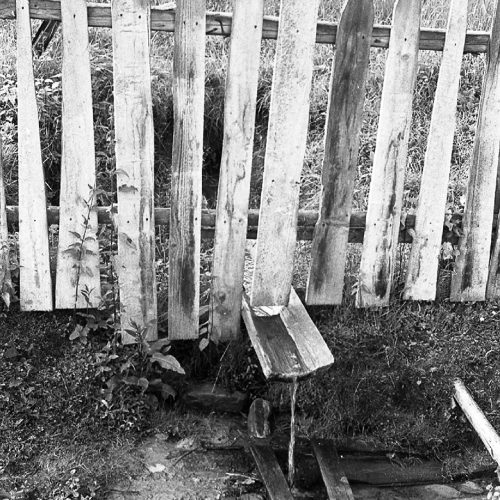
The fact that I lived for a longer period of time in a village, in a peasant house, was for me like an unexpected rebirth. As a child, I had traveled to the countryside several times with my father—an admirer of peasant culture. In the early ‘70s, I rediscovered and gained deeper insight into it, […]

This article is focused on the exploration of the theoretical framework—intermedial appropriation—that can be applied to the analysis of genealogy and legacy of performance art in Latvia, taking into account the socio-political and cultural circumstances in the late socialism period. This was the time when the everyday life was saturated with ideology and state-forced collectivism […]
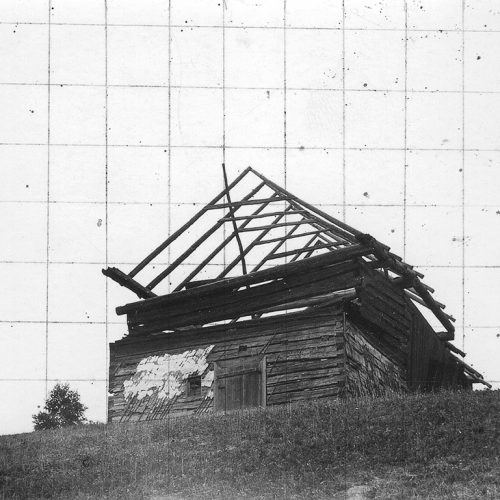
[1]1972 March 27th–VI–72 Clear sky in the morning, good weather for landscape painting—two paintings on cardboard: Pietrosul and Haystacks—Tede is here—I peeled some potatoes for a dish of mashed potatoes, cut some wood—A light rain is falling; the surrounding hills are fading in the mist—It’s wet and chilly—cold. Pietrosul—continued my attempt at a study—followed the […]

“The future is certain. Only the past is unpredictable.”[1] This anekdot wryly characterises the temporality of what was once everyday Soviet life. Yet, Nikita Khrushchev’s 1956 proclamation of “communism in twenty years” remained unfulfilled, and Mikhail Gorbachev’s later attempts at glasnost and perestroika failed at keeping the Soviet Union from ruin. Its future was no […]
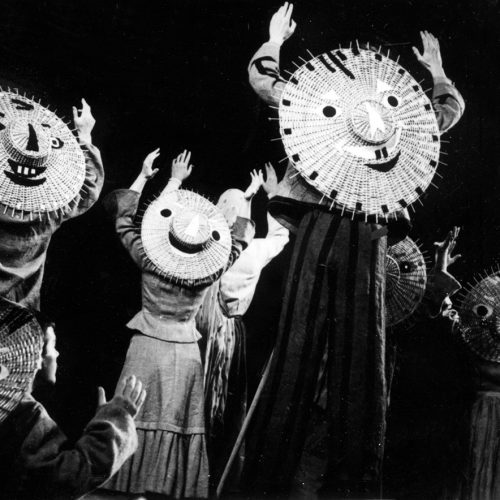
29 May 1965[1] [2] At the 12th season of the Theatre of Nations in Paris, the Bucharest-based Comedy Theatre was a revelation, especially owing to director David Esrig’s participation. Whatever our reservations may be in connection with his vision of Troilus and Cressida, the performance revealed a world-class theatre director. He is the first to […]

Akademia Ruchu [Academy of Movement] was founded in 1972 by Wojciech Krukowski (1944–2014) and co-created by Janusz Bałdyga, Jolanta Krukowska, Zbigniew Olkiewicz, Jarosław Żwirblis, Cezary Marczak, Jan Pieniążek and Krzysztof Żwirblis. Insofar as Krukowski himself referred to Akademia Ruchu’s activity as “theatre,”[1] their work revealed a performative character—the artists, particularly during the 1970s, carried out […]

The year 1962 saw the beginning of a milder period in Hungary’s socio-political history. In spite of a tendency towards swing-like politics, which meant that from time to time the country’s leader, János Kádár, was obliged to make a show of his willingness to maintain Soviet standards, things were not so harsh as before and […]
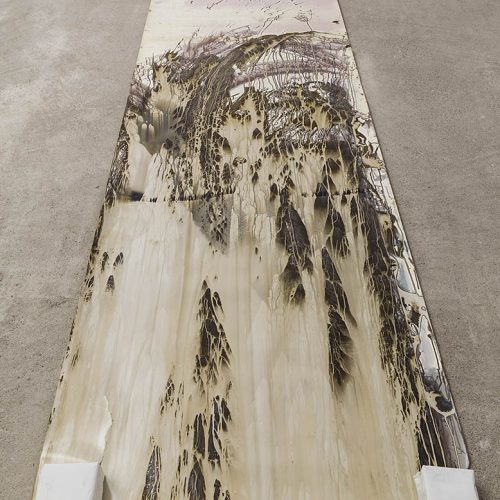
Preliminary Notes In a photograph from artist Laurențiu Ruță’s personal archive we can see a drawing board with several photograms placed on a wicker chair. According to the artist, the board in question had stood in the Cluj building of Uniunea Artiștilor Plastici [Fine Artists’ Union], more specifically of Atelier 35 [Studio 35], which at […]

In international circles, Yugoslav art of the 1960s and 1970s is recognised in terms of performance and related forms of contemporary art. What is less known is the role of theatre in the development of these forms, usually associated with visual art. A special chapter in this history belongs to the Belgrade International Theatre Festival—Bitef.[1] […]
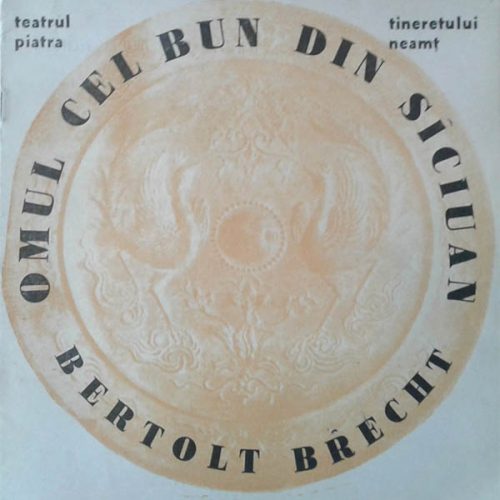
In recent years, the literature dedicated to the cultural exchanges taking place during the Cold War has abandoned the bipolar paradigm (USSR versus USA) expanding its scope to also include the contribution of the countries from the former Socialist Bloc. The years that followed Stalin’s death brought massive changes in Eastern Europe, generating significant developments, […]