

Centres and Peripheries, Continued The studies of East European art in the last decades have experienced diverse and emancipatory developments, with many significant inputs, explorations, (re-)writings and creations of new knowledge about their complex, parallel and simultaneously heterogenous histories from the socialist period. This course attempts to challenge the peripheral position of Eastern Europe within […]

Insofar as performance art was not recognised as an art form by official art institutions in East-Central Europe, it remained a “zone of freedom” in which artists could experiment. Artists employed a range of approaches to the genre, from happenings and actions to body and live art performances, as well as photographic and video performances. […]
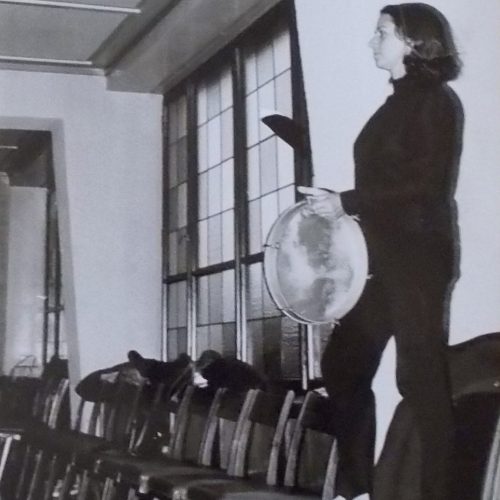
Vera Proca Ciortea’s[1] career spans across three fields of study—physical education, actor training and ethnochoreology—and her choreographic work connects to the roots of contemporary dance in Europe. She trained with Floria Capsali, Gabriel Negry, Harald Kreuzberg, Dorothee Günther, Max Terpis and Tatiana Gsowsky and her aesthetic model was Gret Palucca. Vera Proca Ciortea is one […]