
Configured in the form of interviews or thematic articles, the Reportages section proposes to retrieve the reportage genre by introducing it in the field of academic research. Reportages set out to make visible that less known context behind the formal relations existing along a local historical path, by presenting the processes, activities and conditions of specific artistic and cultural mappings; the encounters between the local and regional / international artistic discourse. Resorting to oral history and to the reconstruction of historical facts with the help of research and a new type of narrative writing, the Reportages represent an attempt to fill in the blank spots on the local cultural map.
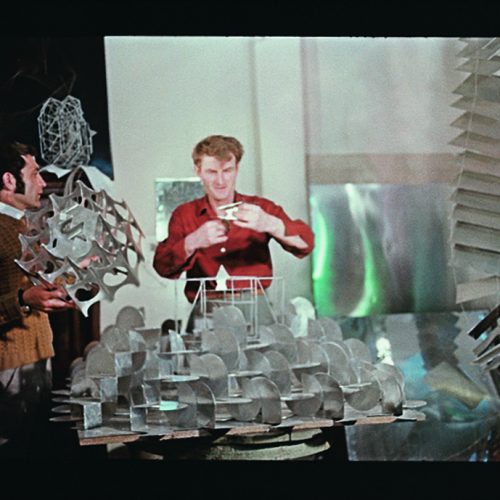
Alles ist Architektur [All is architecture][1] Hans Hollein declared in 1967, seeking to underline that we can perceive the whole world as an architectural phenomenon. In its attempt to decode the visual phenomenon and to use nature’s lesson in the production of art, architecture or design, the Sigma Group from Timișoara (1969–1978) represents a marker […]
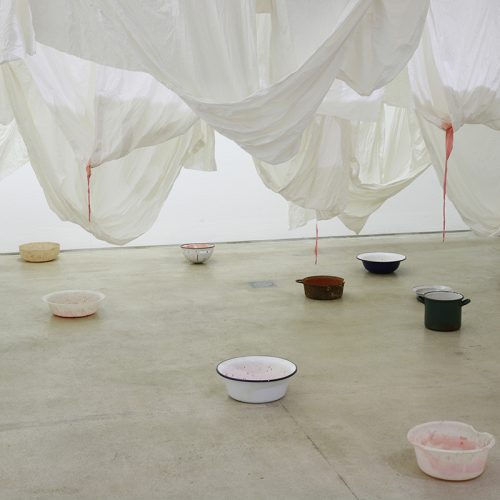
God created the world as the sea created the shores: by receding. André Scrima Whenever I enter Ana Lupaş’s universe,[1] I feel like returning to that primordial artistic language which gets reinforced in privileged, ceremonial spaces, becoming increasingly perceptible as the host withdraws to ever quieter rooms. I have recently been able to spend with the […]
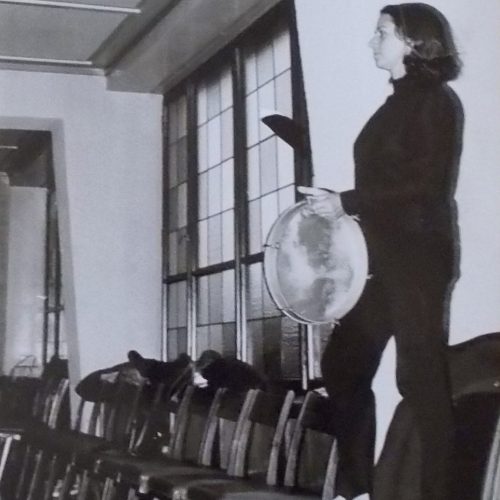
Vera Proca Ciortea’s[1] career spans across three fields of study—physical education, actor training and ethnochoreology—and her choreographic work connects to the roots of contemporary dance in Europe. She trained with Floria Capsali, Gabriel Negry, Harald Kreuzberg, Dorothee Günther, Max Terpis and Tatiana Gsowsky and her aesthetic model was Gret Palucca. Vera Proca Ciortea is one […]
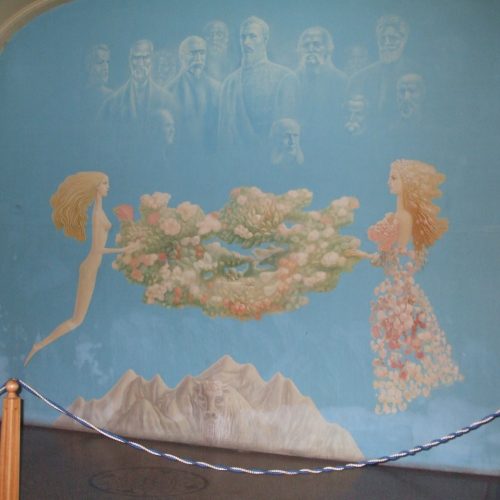
In what follows, I aim to tackle the issue of the politicisation of arts and aesthetics under the Romanian communist regime of Nicolae Ceaușescu. To this end, I will focus on how these cultural-political requirements influenced both art criticism and artistic production. According to the Frankfurt School philosopher Theodore Adorno, there is a significant difference […]
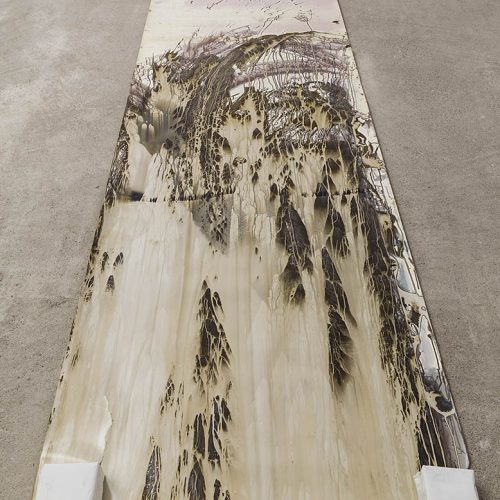
Preliminary Notes In a photograph from artist Laurențiu Ruță’s personal archive we can see a drawing board with several photograms placed on a wicker chair. According to the artist, the board in question had stood in the Cluj building of Uniunea Artiștilor Plastici [Fine Artists’ Union], more specifically of Atelier 35 [Studio 35], which at […]
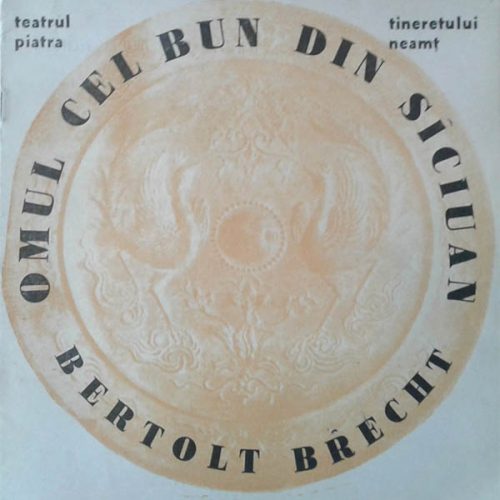
In recent years, the literature dedicated to the cultural exchanges taking place during the Cold War has abandoned the bipolar paradigm (USSR versus USA) expanding its scope to also include the contribution of the countries from the former Socialist Bloc. The years that followed Stalin’s death brought massive changes in Eastern Europe, generating significant developments, […]
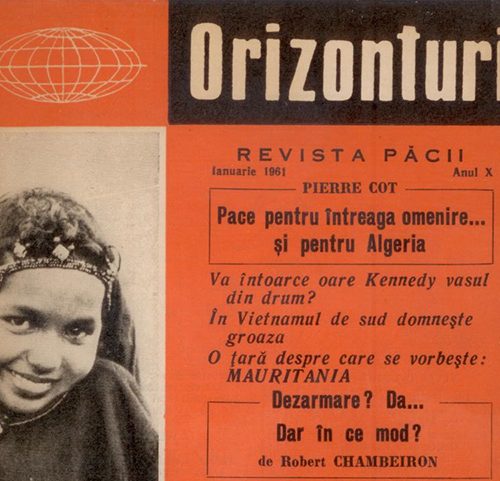
I. Regardless of the political orientation of the governing groups, postsocialist transition had a Eurocentric structural character. The imperative of Westernisation imposed itself quickly as a precondition for democratisation, in terms acknowledged by both anticommunist dissidents and the “former communist” authorities after 1989: “the end of history,” the imperative of Western “liberal democracy” “at the […]
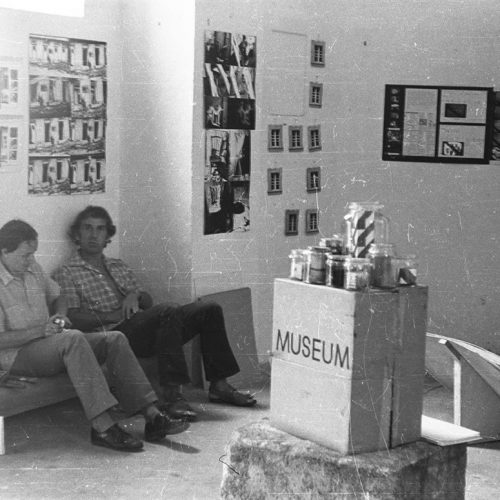
I think that in an archive the material that comes in just accumulates there. There is the active person, maybe an artist; there can also be somebody else, who needs a space to do his activity, and in this space he is building connections. So there are other people needed in this space, too. This space can be the whole world.
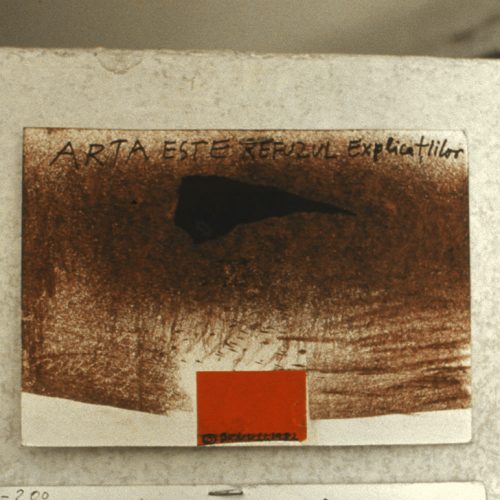
On 7 May 1982, Ioan Bunuș sent to his friend, the Tîrgu Mureș-based artist Károly Elekes, a postcard with the text: “Let us make some artistic interventions on postcards!” What for Bunuș and Elekes seemed to be a “discovery” of mail art by incorporating it in their own practice would mark the start of a […]